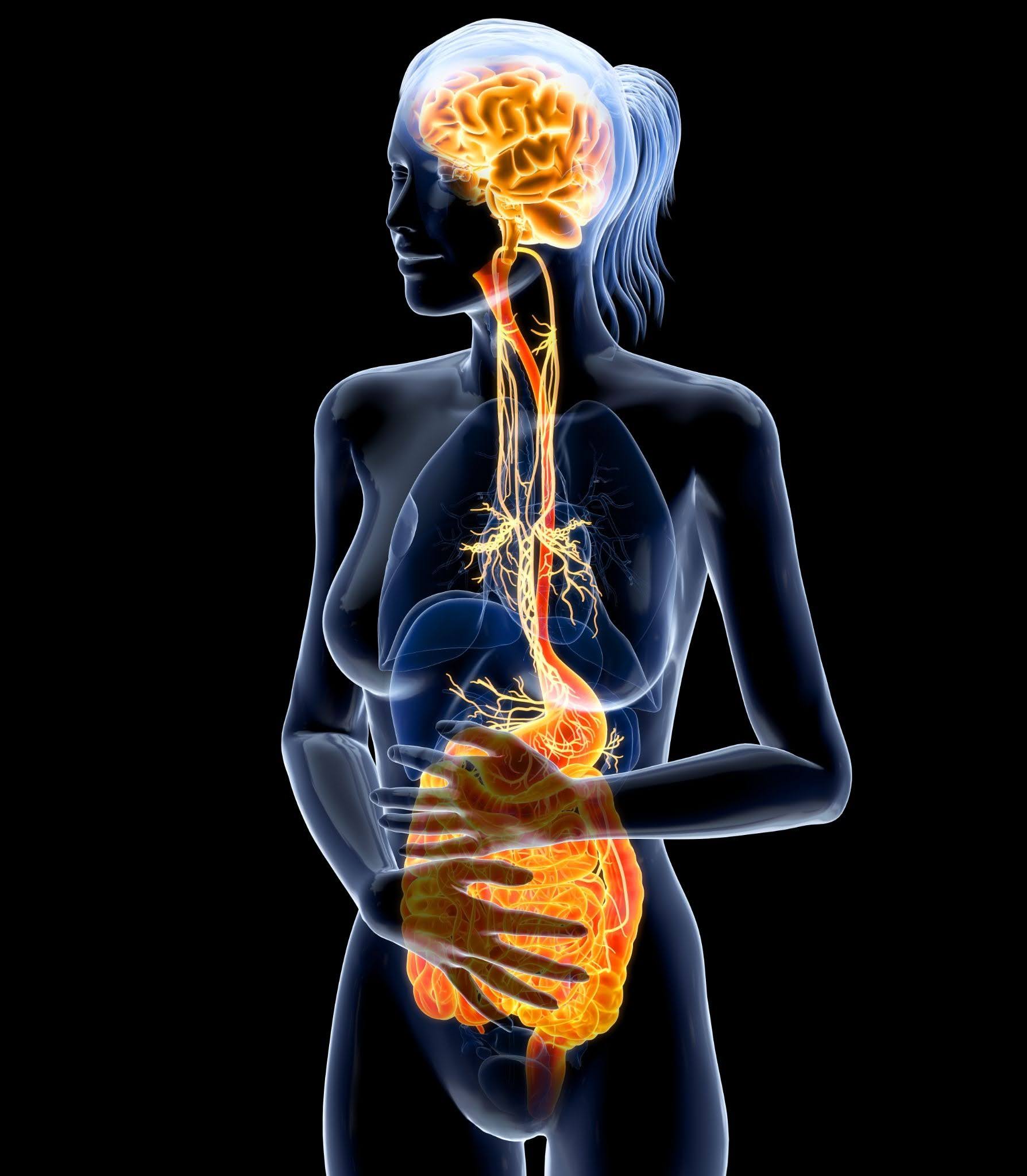
What is Leaky Gut?
The science on intestinal health has moved fast. Intestinal hyperpermeability, what most people call leaky gut, is now well-documented, measurable, and increasingly understood as a contributing factor in conditions most people would never think to connect to their digestive tract.¹² The gut barrier is real, its breakdown is common, and its effects reach well beyond digestion.
The gut barrier is more sophisticated than you'd expect
Your digestive tract handles something extraordinary every day. It encounters trillions of microbes, food particles, and environmental compounds, and it has to decide, constantly, at a molecular level, what gets into the body and what doesn't. There are multiple layers to the gut lining.
Epithelial Cell Layer- A single cell layer thick, running the full length of your small and large intestine. This layer is a precise gatekeeper: it lets nutrients, electrolytes, and water pass into the bloodstream while blocking bacterial toxins, pathogens, and undigested food molecules from crossing over.³⁴
Tight Junctions- These are protein structures that seal the space between neighboring epithelial cells
Mucus Layer- A gel-like substance that sits on top of the epithelial cells, it protects the lining by trapping microbes and food remnants before they can be directly abrasive intestinal cells.. This layer has selective permeability, meaning, specific nutrients and small molecules can still pass through the gel structure.
Immune Cells- They monitor microbial activity and respond to threats. They produce immune compounds like secretory IgA, which helps bind microbes and keep them from attaching to the cell wall. This is one of the many markers we assess for in all of our patients, low levels can lead to vulnerable gut lining and high levels can indicate microbial overgrowth.
What happens when the gut barrier becomes “Leaky?”
Leaky gut occurs when tight junctions loosen or epithelial cells become damaged. This can result from poor diet, certain medications, acute illness, or an imbalance in the gut microbiome.¹⁶ When it happens, bacterial fragments, toxins, and partially digested food molecules that would normally stay inside the digestive tract begin passing into the bloodstream.
The immune system reads these as foreign invaders and mounts a response. The result is chronic, low-grade inflammation, not the dramatic, acute kind you'd notice, but a sustained slow burn that interferes with normal physiology.²⁵
Where leaky gut shows up beyond your gut
This is where it gets interesting. Because the gut is deeply connected to the immune system and metabolic processes, barrier dysfunction can drive symptoms that seem completely unrelated to digestion.
Autoimmune conditions
When microbial fragments circulate in the bloodstream, the immune system produces antibodies to neutralize them. The problem is that some of those microbial and food particles are structurally similar to the body's own tissues, a phenomenon called molecular mimicry. When the structural resemblance is close enough, the immune system can start targeting the body itself.
A clear example: gliadin, a fragment from the gluten protein, has a similar protein structure to thyroglobulin, the main protein produced by the thyroid gland. An immune response to gliadin can, in some people, cross-react with thyroid tissue, which is part of why some people with Hashimoto's thyroiditis see improvement on a gluten-free diet.
Metabolic health
Gut barrier dysfunction has also been studied in relation to type 2 diabetes, obesity, elevated cholesterol, and non-alcoholic fatty liver disease. When permeability increases, bacterial toxins called lipopolysaccharides (LPS) can enter the bloodstream, a process researchers call metabolic endotoxemia.² Even at low circulating levels, these toxins can disrupt insulin signaling and trigger the kind of low-grade inflammation associated with metabolic dysfunction. Over time, this can contribute to insulin resistance, weight gain, and fat accumulation in the liver.
One microbe worth knowing: Akkermansia muciniphila. It has a well-documented role in maintaining the mucus layer that protects the gut lining.⁶ A healthy mucus layer means fewer inflammatory particles crossing into the bloodstream. In practice, we frequently see metabolic markers, including cholesterol and blood sugar, improve when we address the underlying gut environment.
Can it be healed?
Yes.
The path looks different for everyone. By the time someone is experiencing symptoms, their gut can be significantly out of balance, and general advice, eat more fiber, cut processed food, often isn't enough to move the needle. Some of the most health-conscious people we see have significant gut dysfunction.
The most efficient starting point is a comprehensive stool test.⁶ With a clear picture of which microbial imbalances are present, it becomes possible to build a protocol that's actually tailored to the individual. Beneficial bacteria produce short-chain fatty acids that nourish intestinal cells and reinforce tight junction integrity. Harmful bacteria produce inflammation, erode the mucus layer, and contribute to barrier breakdown. Knowing which you're dealing with matters.
Many factors shape the gut lining, genetics, stress, sleep, medications, prior illness. At Clarity Health, we address those when they're clearly relevant. But lifestyle coaching isn't our primary focus. Our experience is that most people make better choices naturally, once they feel well. The goal is to get them there.
Our gut assessment captures over 100 data points to build an individualized picture of what's happening in your gut. No two microbiomes are alike, and no two care plans should be either.
If you're dealing with symptoms that haven't responded to the usual approaches, persistent bloating, food sensitivities, fatigue, metabolic issues, leaky gut may be worth investigating.
Take the Gut Check Quiz to see if it could be part of your picture.
References
- Fasano A. Intestinal permeability and its regulation by zonulin. Physiological Reviews.
- Bischoff SC et al. Intestinal permeability — a new target for disease prevention and therapy. BMC Gastroenterology.
- Vanuytsel T et al. The role of intestinal permeability in gastrointestinal disorders. Nature Reviews Gastroenterology & Hepatology.
- Moonwiriyakit A et al. Tight junctions: from molecules to gastrointestinal diseases. International Journal of Molecular Sciences.
- Macura B et al. Intestinal permeability disturbances: causes, diseases and treatment strategies. International Journal of Molecular Sciences.
- Aleman RS et al. Leaky gut and the ingredients that help treat it: a review. Molecules.
- Lee SH. Intestinal permeability regulation by tight junctions. Clinical Endoscopy.
- Tajik N et al. Targeting zonulin and intestinal epithelial barrier function to prevent onset of arthritis. Nature Communications.