“Bacillus subtilis was my favorite probiotic strain to recommend. Then I found out where it actually comes from.”
Most of my career, I was told, and then repeated to my patients, that spore probiotics were soil organisms. And although that is true, they are very important soil organisms. Last year, I discovered a very different story around spore bacteria and their history in traditional cuisine, and it made me wonder… is this one of the reasons why Japan is one of the healthiest countries with the longest lifespan?
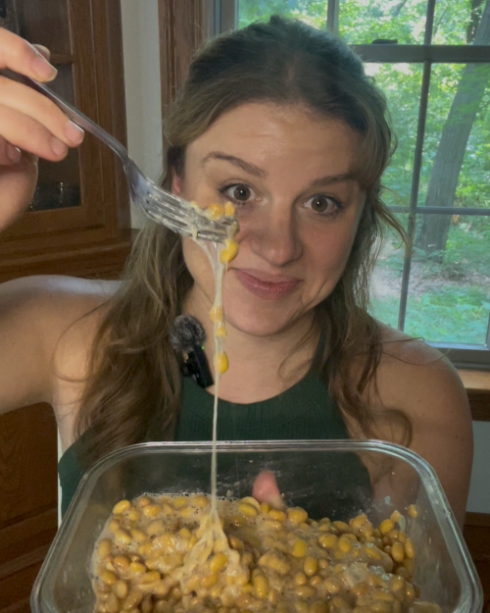
In a world of relentlessly changing health fads, last year I decided I was going to research what the Japanese ate on a daily basis, since they statistically have much better health than most Western countries. This led me down a YouTube spiral of Japanese breakfasts, where one of the main foods consumed as a nation is something called natto, which is fermented soybeans. From the videos, they looked like slimy beans.
I had heard of these beans before in the functional health world, because they contain high amounts of an enzyme called nattokinase (that's a whole article in itself). This became popular around COVID times (hold your opinions, I'm just sharing facts!). So, as any true scientist does, I consulted google (google scholar, give me some credit!) about all the health benefits of natto.
To my shock and astonishment… the main bacteria that grows on natto is something called Bacillus subtilis. The reason this was so surprising was because I was very familiar with this little strain of bacteria. It is the main ingredient in HU58 from Microbiome Labs. In fact, it was my FAVORITE bacteria to recommend. I had probably recommended it over a hundred times, because at that time I was still full-time in a busy practice with over 1,000 patients on my roster.
So I had such mixed emotions when I learned this. Part of me felt irritated that the food source of the bacteria had been gate-kept and other part of me became insatiably interested in learning all I could about this little guy. I think I could fill a book with all the interesting facts I've learned about how this bacteria (and its family of spore probiotics) makes such a large impact on human health, but I'll limit it to some of the most captivating aspects.
That said, it's important to note that, as with most things in nature, you need balance. Too much Bacillus in the gut can lead to constipation and bloating, and can push out other beneficial bacteria. Unfortunately, the only way to know if there's too much or too little is by doing a stool test and seeing what the ratios are. From my experience, the individuals who struggled with taking this probiotic were typically those with stubborn constipation or very reactive (diarrhea-prone) guts. In these individuals, we needed to do more prep work before their gut could handle adding this in.
Okay, I had to add that public service paragraph because, although I truly do love spore probiotics, the one universal truth in functional medicine is that there is not a single supplement or recommendation that is universally beneficial.
At Clarity Health, we really believe that health starts in the gut… and these slimy little beans (or supplement, if you want to avoid the slime) are powerful movers and shakers. Here are some of Bacillus subtilis's primary functions:
They produce antimicrobial peptides
They produce substances such as iturin, surfactin, and subtilin that kill or limit the growth of other disruptive bacteria in the gut, such as Clostridium species, Enterococcus faecalis, certain Staphylococcus, and opportunistic fungi including Candida 1. Think of them as pulling up some of the weeds, not all, but enough that they clear the way for other, beneficial microbes, to grow.
They pave the way for Lactobacilli and Bifidobacterium colonization
Lactobacilli and Bifido are probably the two biggest celebrities of the gut microbiome, for good reason. There's a ton of research on their benefits. But one major deficit they have, in comparison to Bacilli, is that they're fragile. Even at mega doses, it can be hard for them to colonize the gut if the gut is a hostile environment for them. Bacilli help clear the path for them, by clearing away the overgrowth of problematic bacteria.2
Immune calibration toward tolerance
In a gut with chronically elevated inflammation (elevated IL-6, TNF-α, reduced IL-10), the mucosal immune system is in a reactive posture that begins to reject things, food, drinks, even yourself (aka autoimmunity). In a 2021 randomized controlled trial, B. subtilis supplementation increased regulatory T cells, the immune system's tolerance machinery, while reducing cytotoxic T cell (the name gives it away, immune cells that are Cyto-TOXIC) activity under baseline conditions. At Clarity, we call this building resiliency in the gut.3
Now, back to my original question: is Bacillus subtilis one of the contributing factors as to why the Japanese tend to live healthier for longer? Although, it would be a leap to say any one thing contributes to a longer lifespan, because it is always multi-variable, the regular consumption of fermented foods, including Natto, is one one of the primary hypotheses.
A large Japanese cohort study of nearly 93,000 adults followed over almost 15 years. They found that it wasn't total soy consumption that was associated with lower mortality risk, it was specifically fermented soy. People with the highest natto and miso intake had roughly a 10% lower risk of dying from any cause compared to those with the lowest intake, and natto specifically showed a significant inverse association with cardiovascular mortality in both men and women.4
If you are thinking about this critically, you might ask, “Well, was the longevity due to the probiotic strain or the nattokinase?” We can’t know specifically because I could not find a longevity study that spliced out those two variables. What we do know is that the probiotic strain itself has shown to decrease LPS-endotoxins (inflammatory toxins released from your gut) by 42% and triglycerides by 24%. Since both of those variables contribute to cardiovascular disease, I don’t think it is a leap to say that this probiotic, on its own, can be very beneficial.5
But here's what I keep coming back to: the Japanese weren't taking a single supplement for a month. They were getting a small dose of this probiotic every morning, as part of a meal, in small consistent amounts, across an entire lifetime. They had daily habits that tended and nourished their gut ecosystem. Whether you're ready to acquire a taste for slimy fermented beans or prefer your Bacillus subtilis in capsule form, the principle is the same, your gut needs regular tending. Just like any garden
At Clarity, this is the kind of thinking that drives how we work with patients. Not chasing the highest dose of the trendiest supplement, but understanding what your gut actually needs, in what order, and why. If that approach resonates with you, subscribe to the Clarity newsletter. We share what we're learning as we're learning it, the research, the clinical patterns, the things that surprised us, because we WANT you to be part of that conversation. We want to shift how people think about the gut.
Written by Dr. Erin Gattuso, ND

Citations
- Ansari, F., et al. "Surfactin-like broad spectrum antimicrobial lipopeptide co-produced with sublancin from Bacillus subtilis strain A52." Frontiers in Microbiology (or PMC7300217), 2020.
- "Competence and sporulation factor derived from Bacillus subtilis improves epithelial cell injury in intestinal inflammation via immunomodulation and cytoprotection." International Journal of Colorectal Disease, 2012.
- Freedman KE, Hill JL, Wei Y, et al. "Examining the Gastrointestinal and Immunomodulatory Effects of the Novel Probiotic Bacillus subtilis DE111." International Journal of Molecular Sciences. 2021.
- Katagiri R, Sawada N, Goto A, Yamaji T, Iwasaki M, Noda M, Iso H, Tsugane S; Japan Public Health Center-based Prospective Study Group. "Association of soy and fermented soy product intake with total and cause specific mortality: prospective cohort study." BMJ. 2020 Jan 29;368:m34. doi: 10.1136/bmj.m34. PMID: 31996350.
- McFarlin BK, Henning AL, Bowman EM, Gary MA, Carbajal KM. "Oral spore-based probiotic supplementation was associated with reduced incidence of post-prandial dietary endotoxin, triglycerides, and disease risk biomarkers." World Journal of Gastrointestinal Pathophysiology. 2017 Aug 15;8(3):117-122. doi: