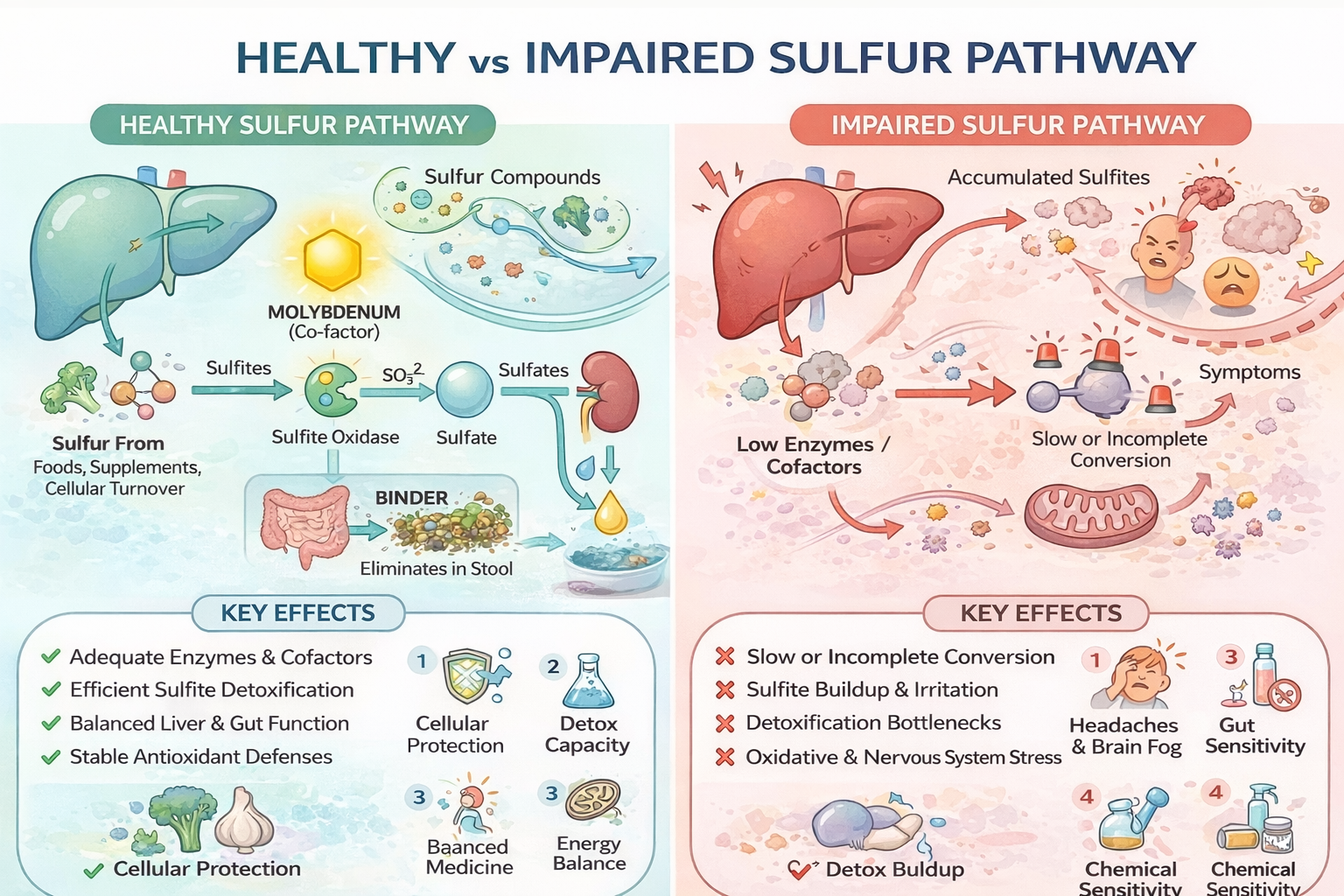
The Sulfur Pathway & Whole-Body Balance
Sulfur metabolism refers to a collection of tightly regulated biochemical pathways that allow the body to safely process sulfur-containing compounds from food, supplements, hormones, neurotransmitters, and normal cellular turnover. Sulfur is essential for life and plays a central role in antioxidant defense, detoxification, connective tissue integrity, and cellular signaling. At the same time, sulfur metabolism produces reactive intermediates that must be efficiently converted, neutralized, and eliminated. When sulfur pathways function well, sulfur supports resilience and repair. When these pathways become overwhelmed or impaired, sulfur intermediates can accumulate and contribute to neurologic, digestive, and systemic symptoms.
Key Functions of the Sulfur Pathway
The sulfur pathway supports multiple critical processes, including sulfation, antioxidant production, and detoxification. Sulfur is required to produce glutathione, one of the body’s primary antioxidants, and is involved in the metabolism of hormones, neurotransmitters, medications, and environmental toxins. As sulfur-containing compounds move through these pathways, they are transformed stepwise into forms that can be safely excreted through urine or bile. This process depends on coordinated enzyme activity, adequate nutrient cofactors, healthy liver function, and efficient gut elimination. Disruption at any point in this chain can slow clearance and increase the burden of reactive sulfur byproducts.
Sulfites, Sulfates, and Metabolic Bottlenecks
A central feature of sulfur metabolism is the conversion of sulfites into sulfates. Sulfites are a normal intermediate produced during the breakdown of sulfur-containing compounds, but they are highly reactive and can be irritating when they accumulate. Sulfates, by contrast, are stable and easily eliminated. When the enzymes responsible for this conversion are underperforming, sulfites may build up and contribute to symptoms such as headaches, flushing, fatigue, brain fog, nausea, or exaggerated reactions to sulfur-rich foods and supplements. This bottleneck can occur due to nutrient insufficiency, genetic variation, inflammation, or excess sulfur load relative to processing capacity.
Genetic Variations & Individual Sulfur Tolerance
Sulfur metabolism varies significantly from person to person. Some individuals carry genetic variations that reduce the efficiency of sulfur-processing enzymes or increase reliance on specific nutrient cofactors. These variations do not necessarily cause disease, but they can narrow the margin of tolerance for sulfur exposure. In these cases, normal intake of sulfur-rich foods or supplements—such as cruciferous vegetables, eggs, garlic, glutathione, or NAC—may exceed the body’s processing capacity. When this happens, symptoms can appear quickly and feel disproportionate to the trigger, reflecting a functional bottleneck rather than a true intolerance to sulfur itself.
How Sulfur Pathway Imbalance Can Present
When sulfur pathways are strained, symptoms often emerge across multiple systems. Neurologic symptoms may include pressure-like headaches, irritability, anxiety, brain fog, or a sense of overstimulation. Digestive symptoms such as bloating, loose stools, or abdominal discomfort are common, particularly when sulfur imbalance overlaps with gut dysbiosis or increased intestinal permeability. Systemically, individuals may notice fatigue, poor exercise tolerance, chemical sensitivity, or difficulty tolerating detox or antimicrobial protocols. Because sulfur metabolism intersects with mitochondrial function and neurotransmitter balance, symptoms are often both neurologic and systemic rather than isolated to the gut.
Supporting the Sulfur Pathway
Supporting sulfur metabolism is less about removing sulfur and more about improving the body’s ability to process it efficiently. This includes ensuring adequate intake of key nutrient cofactors, supporting liver detoxification, maintaining healthy gut function, and avoiding excessive mobilization of sulfur compounds when clearance pathways are constrained. In some individuals, targeted support—such as specific minerals or cofactors—can help restore flow through the pathway and improve tolerance over time. When the sulfur pathway is supported appropriately, sulfur can once again serve its essential roles in antioxidant defense, tissue repair, and cellular communication.
The Sulfur Pathway in a Systems-Based Context
At Clarity, we interpret sulfur pathway patterns through the lens of your symptoms and overall physiologic capacity rather than treating sulfur metabolism as an isolated biochemical issue. Sensitivity to sulfur-containing foods, supplements, or detox protocols often reflects a mismatch between sulfur load and the body’s ability to process and clear it, shaped by gut integrity, liver function, nutrient availability, inflammatory burden, and stress physiology. Our approach focuses on identifying where bottlenecks are occurring and why—whether related to digestion, detoxification, mitochondrial function, or immune activation—rather than simply removing sulfur or targeting a single nutrient. By supporting the systems that regulate sulfur processing as a whole, we aim to reduce symptom reactivity, improve tolerance, and help restore flexibility across metabolic and detox pathways so that sulfur can once again play its essential role in supporting resilience, repair, and long-term health.
.jpg)
.jpg)