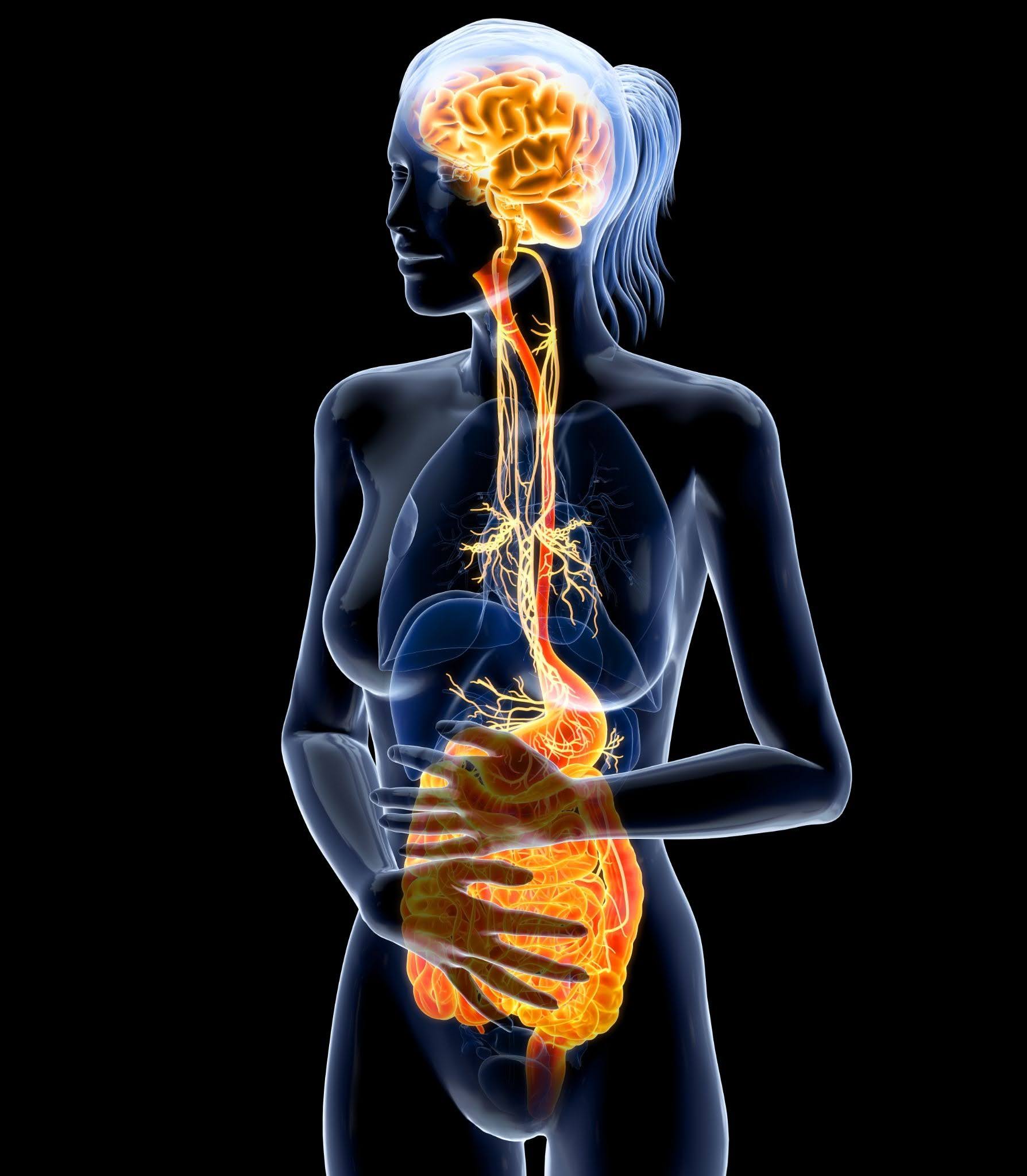
The Enteric Nervous System. You Have Two Brains. Are You Taking Care of Both?
Here is something your doctor probably never told you: there is a brain living in your belly.
Not metaphorically, literally.
Right now, tucked inside the lining of your digestive tract, a network of roughly 500 million neurons is quietly running the show, sensing, signaling, and communicating with your head brain in a conversation so constant that it would take an entire data center to create enough enough to do this through man-mind systems.
Scientists call it the enteric nervous system. And the more we understand it, the clearer it becomes that so many stubborn symptoms , the anxiety, the brain fog, the bloating, the fatigue that never fully lifts, are not separate problems. They are the same story, told from two different ends of the same nervous system.
Your Gut Runs Its Own Show
The enteric nervous system (ENS) is a vast web of nerve cells embedded in the walls of your GI tract, from esophagus to colon. It coordinates every stage of digestion, the muscular contractions that move food along, the release of enzymes and stomach acid, the monitoring of pathogens and nutrients passing through. Remarkably, it can do all of this independent of your brain.
The ENS communicates with your central nervous system via the vagus nerve, a long, wandering cable running between gut and brain. About 80 to 90 percent of the signals traveling along it move upward, from gut to brain. Your gut is not passively receiving instructions. It is actively sending them.
The Serotonin Surprise
Most people think of serotonin as a brain chemical, the "feel good" neurotransmitter that antidepressants target. What surprises nearly everyone is that approximately 90 to 95 percent of the body's serotonin is produced in the gut. The ENS manufactures it not just to influence mood but to coordinate digestion, regulate immune cells, and maintain the gut lining.
When the gut is inflamed or dysbiotic, serotonin signaling is disrupted, and the effects reach the brain quickly. This is why root-cause medicine pays close attention to the gut even when a patient comes in primarily with anxiety, fatigue, or cognitive symptoms. The gut is rarely just about the gut.
When the Second Brain Gets Stuck
Chronic stress is one of the fastest ways to derail ENS function. When the body lives in a prolonged stress state, vagal tone decreases, gut motility becomes erratic, and the intestinal lining grows more permeable , setting off a cascade of immune activation that irritates enteric neurons directly. The ENS can develop its own low-grade neuroinflammation, a state that perpetuates dysfunction long after the original stressor is gone.
This is the picture many patients find themselves stuck in: they have tried probiotics, eliminated gluten, reduced stress — and feel somewhat better but never fully resolved. That is often because the ENS itself needs support, not just the microbiome or the mucosa in isolation.
What Actually Helps
Supporting ENS health means working on several layers at once. Vagal tone is foundational, slow diaphragmatic breathing, humming, and certain meditative practices are not just stress tools, they are direct ENS interventions.
The microbiome matters because specific bacterial species produce the short-chain fatty acids and neurotransmitter precursors that nourish enteric neurons. And mucosal integrity is critical, because a compromised gut lining keeps the immune system in a state of chronic alert that the ENS cannot escape.
Functional and integrative medicine brings all of this together. Rather than treating digestive symptoms and mood symptoms as separate problems, we look at the whole pattern , what the gut is signaling, how the nervous system is responding, and where the biggest leverage points are for that specific person. That bigger picture is where lasting change tends to happen.
Ready to Hear What Your Second Brain Has Been Saying?
At Clarity, we take the time to look at the whole picture , the patterns, the connections between systems, and the story underneath the symptoms. If you are ready to stop managing problems one at a time and start understanding what is actually driving them, taking our Gut Check Quiz the best first step.
Let's find out what your gut has been trying to tell you. Take the Clarity Gut Check Quiz to get started
Citations
- Tache Y & Bonaz B. "Corticotropin-releasing factor receptors and stress-related alterations of gut motor function." PMC 1716215.
- Ghosh S & Bhattacharya S. "Serotonin in the gut: Blessing or a curse." ScienceDirect. 2018.


.jpg)